




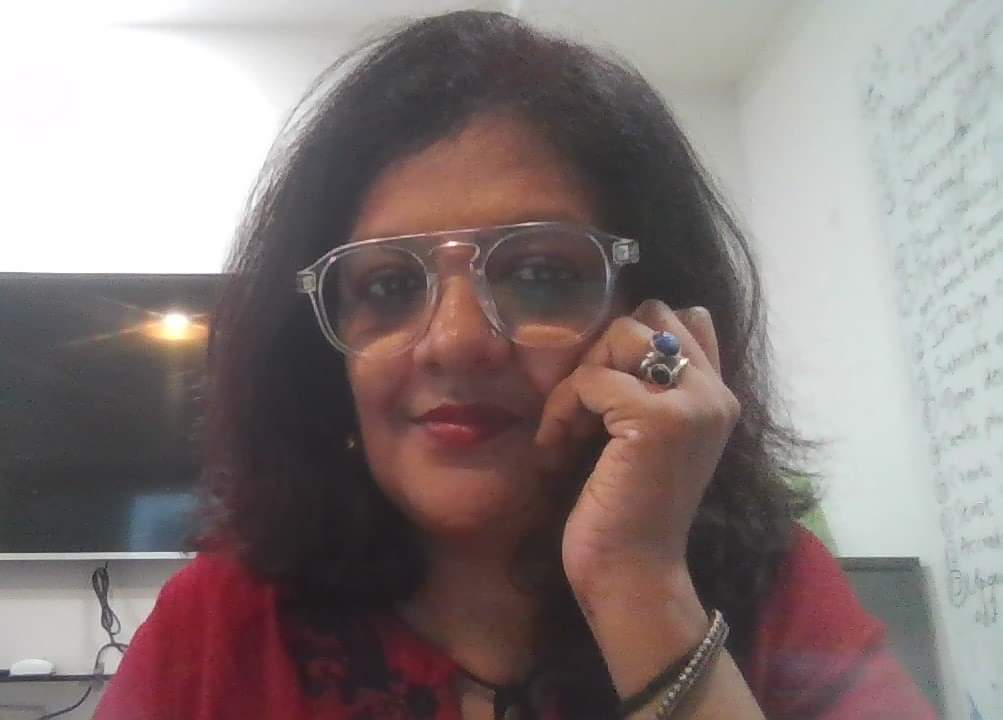
A pinch of optimism can turn the tide, says writer, activist Ram Puniyani
Today, India is battling two major evils – hatred and selfishness, says Ram Puniyani, in an exclusive interview with Salar News.
.png)
-
Like many others in the country, Ram Puniyani had not expected the demolition of the Babri Masjid in 1992 (
It is rather bleak out there. India seems to be going through one of its darkest periods in current history with all round incertitude.
There are
daily contentions by the Opposition parties accusing the Narendra Modi-led
government of succumbing to US pressures, of deteriorating relations with our
neighbours, the controversial ongoing Special Intensive Revision (SIR) exercise
in the poll-bound states with allegations of minorities, especially Muslims,
being deliberately left out of the electoral process. These, along with
ever-increasing inflation, relentless taxation, crumbling infrastructure and
the indifference of politicians has left the citizens with little hope.
In these
circumstances, a meeting with writer, activist and human rights crusader Ram
Puniyani comes as a breath of fresh air. “With a pinch of optimism, you can
tilt things in a positive direction,” says 80-year-old Puniyani, smiling, when
I ask him why he continues his struggle against communalism just as he did 34
years ago in the wake of the 1992 Babri Masjid demolition.
“There are
obstacles, but they are not insurmountable,” he says. “On one hand you see
someone like Himanta Biswa Sarma and the hate-fuelled politics that is being practiced in the country.
On the other hand, you see someone like Mohammed Deepak and you know there is
hope. There is hope in the new generation. A lot of youngsters want to see
employment, healthcare, scientific development. They are not so easily swayed
by religious propaganda.”
How did Puniyani, a medical doctor and an IIT Bombay professor, become an activist?
“I come from a refugee family,” Puniyani says. “When we came to India from
Pakistan (during the Partition), my parents had to struggle to make ends meet.
I often did not see my father in my childhood because he worked long hours. I
did well in school and college and secured myself a seat in Nagpur Medical
College. It is there that I confronted real, devastating poverty for the first
time.”
“The long
queues of people before the OPDs and the desperation of the poor to get help
when someone was unwell was nothing like what I had known as a child, even
though I came from a relatively poor family.”
“One day, I
saw a long queue before the blood bank. I first thought people had lined up to
get blood for those who were ill. When I realised that people had queued up NOT
to procure blood for their loved ones but to sell blood for a few rupees, I was
terribly shaken. I realised that I wanted to do something more than just
medicine. In my spare time, I began working with trade unions, mostly as a
researcher trying to understand the lives of the poor in the country.”
The turning
point for Puniyani came in 1992. Like many others in the country, he had not
expected the demolition of the Babri Masjid. “However, I quickly realised that
this was not just the breaking of one mosque, but a direct attack on
democracy,” he says. Puniyani began studying the issue closely to understand
the fascism of the Sangh Parivar. “I soon realised that the RSS was not just
against Muslims, but they were against Christians, Adivasis, Dalits, and women
as well.”
Dwelling a
little into history, Puniyani recounts that before 1975, the only identity that
the RSS had was of those who were associated with the assassination of Mahatma
Gandhi. In 1975, the RSS joined hands with the Bihar’s JP movement and began
piggybacking on its success. In the elections that followed, Congress was defeated
and LK Advani, a known RSS man, became the Information and Broadcasting
Minister in the Janata Party government and he began filling the media with RSS
sympathisers. That is the effect we are seeing today, the author of the 1999
book ‘Fascism of Sangh Parivar’ said.
After Babri
demolition, noted social reformer Asghar Ali Engineer had set up an
organisation called EKTA
(Committee for Communal Harmony) to combat the spread of communalism in the
country. Puniyani joined
EKTA’s study circle, began reading books and attending lectures. “In a way you
can call Asghar Ali Engineer my mentor. We also became very firm friends,” he
says fondly recalling his time with Engineer.
Somewhere
around that time Puniyani decided to take a break and devoted his time to the cause
of promoting secularism. “The work is important. It is not just about fighting
for the Muslims or the minorities. It is about saving democracy. It is about
saving the Constitution,” he says.
“Look at
the situation today. The farmers are unhappy. Workers are unhappy. The way
women’s issues are being handled, many women are unhappy. The BJP has lost its
vote base and this is the reason why they are depending on muscle power and
manipulation, why they are trying to prevent people from voting by removing them
from the voters list.”
According to Puniyani, change does not rest on electoral politics alone. A
four-layered plan of action is necessary for things to change.
The action
plan
The first
layer is at the level of the community. We need to build strong community
centres to propagate the truth about what is really happening in the country,
to clear the existing misconceptions and call out on the half-truths.
At the
second layer, we have to learn how to use social media effectively.
The third
layer would be the coming together of all Human Rights groups, which would
bring pressure on all political parties from the bottom - in terms of citizen’s
awareness - and from the top - in terms of judicial interventions.
The fourth
layer would be proper political intervention – there is a need for a clear
electoral plan. India Bloc was a good experiment but there is a need for more
such initiatives.
Puniyani
said that there is a plan to begin a citizens initiative called Eddelu India
(Wake up, India) on the lines of Eddelu Karnataka, a popular citizens
collective in the State which played a crucial role during the 2023 Karnataka
Assembly elections by spreading awareness among citizens.
“We are a
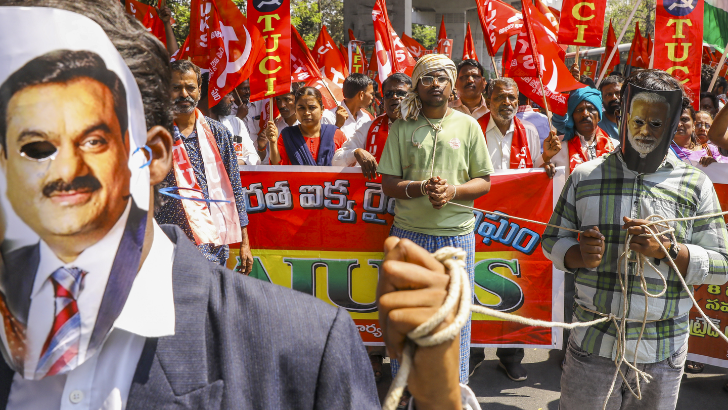
neo-capitalist society,” Puniyani says. “The income differentiation is very
high in India with the top 10 per cent holding nearly 50 per cent of the
country’s wealth. Added to that are the attempts by the current government to
abolish the public sector. This, he says, is dangerous. India is a country that
has been built on the power of the public sector companies. The current
challenge before us is also to protect and preserve our public sector, without
surrendering it to the political powers.”
Why does the Sangh have an ambivalent attitude
towards the minorities?
Puniyani
also called out on the blow hot-blow cold attitude towards Muslims and other
minorities. He said the RSS-BJP ideology gets a lot of flak in international
circles and it serves them well to pretend that they are friends with the
Muslims and other minorities. In India, however, the Muslims are always
presented as invaders, outsiders, illegal immigrants to their core cadre.
Will
India see a revolution on the lines of a farmer’s struggle?
It cannot
be ruled out, Puniyani says. It is possible that the youth can come together
against social and economic injustice. The rulers are arrogant about being are
right when they are actually in the wrong.
Look at
something like the dismantling of MNREGA and replacing it with GRAMG. MNREGA
was a rights-based initiative which worked on the basic principle that people
in rural areas had a right to employment in their own settings and it was the
duty of the government to provide that employment. GRamG, on the other hand, is
a pre-approved plan of providing employment with the type and duration of the
employment resting on the government.
Where
does an activist, scholar and political observer like Puniyani see India 50
years from now?
Things are
going to be difficult, he says. We are already dealing with communalism and
crony capitalism. The joker in the pack is AI. There is a widespread fear that
people are going to start losing their jobs because of AI. If that happens, we
will have to think of something like universal basic income. And in a country
like India where the caste system is so rampant, it will have terrible
ramifications, with only a certain section of the society benefitting.
Times are tough for India, Puniyani says. Today, India is battling two major evils – hatred and selfishness. It is for the right-minded people to remain committed to humanism and bypass/fight the forces of hatred and selfishness, he says.
Share Now

Leave a Reply
Your email address will not be published. Required fields are marked *
Other Stories
.png)


.png)
.png)
